
 Open Client Check
 Open COC / ESC
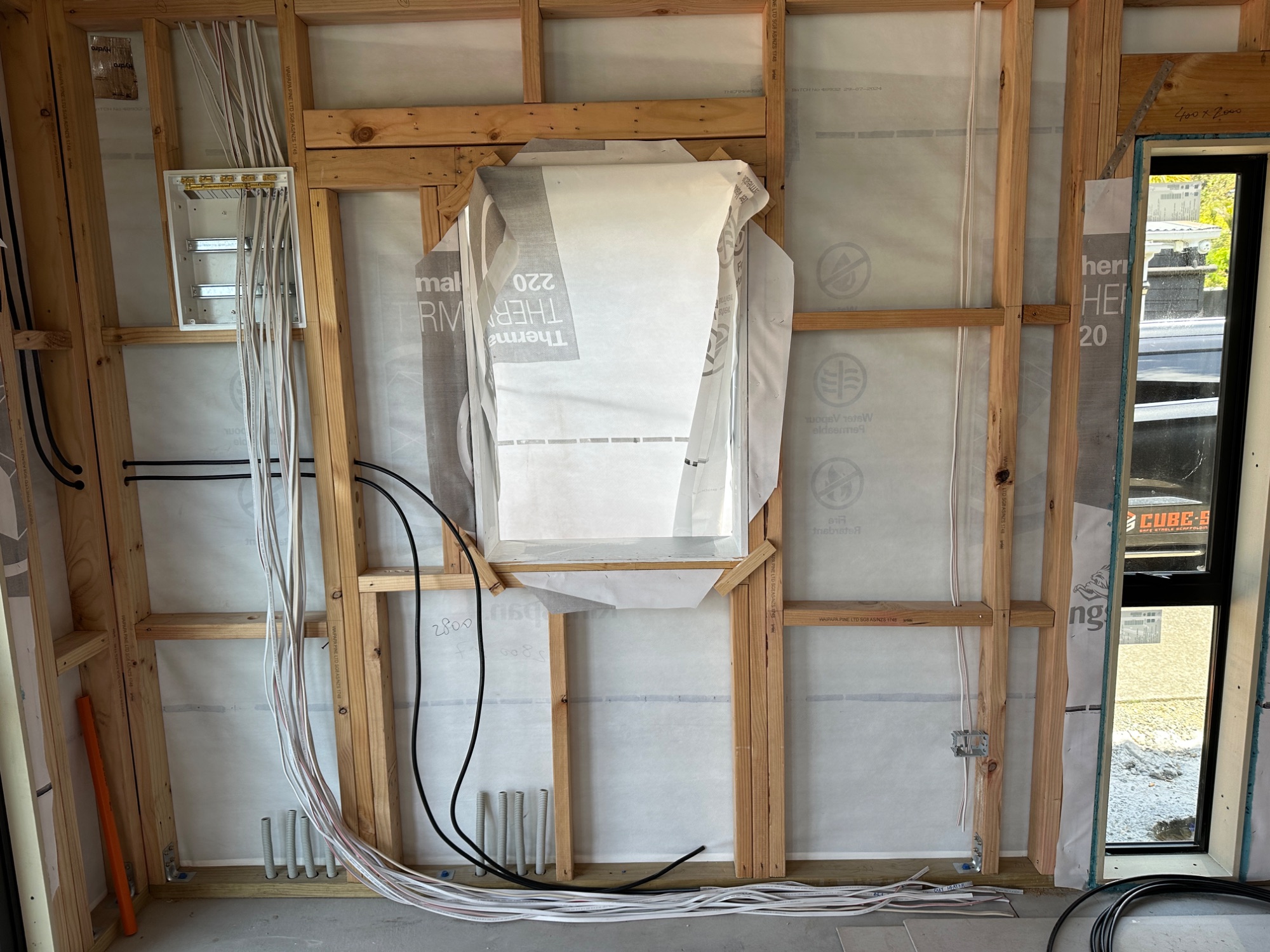
A house does not need rewiring because of its age alone. WorkSafe says the November 2025 regulation changes do not mean everyone must upgrade an old installation: it may stay and be repaired so long as it is not unsafe. A rewire usually comes up when the wiring shows warning signs, when a fault is traced to a circuit's cables, or when a renovation opens the walls. Our house rewiring can cover one circuit, one room or the whole house.
How do I know if my house needs rewiring?
WorkSafe's guidance on electrical wiring in your home names three signs that an installation is becoming dangerous:
- plugs or sockets that are hot to the touch, or have brown scorch marks
- fuses that blow, or circuit-breakers that trip, for no reason
- lights that flicker
It says these signs may mean the wiring needs upgrading, and notes that installations age and can become overloaded, particularly in old homes not wired for the number of appliances in use today. After noticing any of these signs, or when buying a house, WorkSafe advises having a licensed electrician or electrical inspector check the internal wiring.
What you notice, and what to do
Not every sign points to the cables: some point to one appliance or to the switchboard, and fault finding traces the cause by testing.
| What you notice | What it may point to | What to do |
|---|---|---|
| Plugs or sockets hot to the touch, or with brown scorch marks | A WorkSafe warning sign: the wiring may need upgrading | Stop using it and have the wiring checked by a licensed electrician |
| Fuses that blow or circuit-breakers that trip for no reason | A WorkSafe warning sign: the wiring may need upgrading | If it keeps happening, call a licensed electrician. Never replace fuse wire with a larger size or anything else |
| Lights that flicker | A WorkSafe warning sign: the wiring may need upgrading | Have the wiring checked by a licensed electrician |
| An RCD that trips when one appliance is switched on | That appliance | Have it repaired or replaced. If the RCD trips only when several appliances are on, have a licensed electrician check it |
| A tingle from a light, or a shock, however mild, from an appliance, a tap or a sink | WorkSafe: a tingle is usually a warning of danger, and a shock can come from plumbing as well as appliances | Disconnect at once any appliance that has given a shock. After any shock, seek medical treatment and advice immediately, even if the person feels fine. Have an electrician find the cause |
| Scorch or burn marks on the switchboard, or arcing or crackling sounds | A fault at the switchboard | WorkSafe's advice: turn the main switch off immediately and contact a registered electrical worker |
| Multi-boxes and extension cords in daily use in a room with one socket | Multi-boxes are common in older houses, WorkSafe notes; extension cords are for temporary use only | Have a licensed electrician install sockets where power is needed permanently |
More load, and partial rewires
WorkSafe's page on charging an EV at home says that a home's wiring, depending on its age, may need upgrading or new wiring installed, because high-draw devices can create heat, which can be a fire risk with older wiring not designed for the demand. A wall-mounted EV charger runs on its own dedicated circuit; see the home EV charger checklist. New lighting and socket circuits from the switchboard in a home must have RCD protection, WorkSafe states, so whether the board can take them is settled with the quote.
A rewire can cover only the circuits that need it. WorkSafe notes that only the parts that are changed need to meet the new standards.
What you can check, and what needs an electrician
Without doing any electrical work, you can feel whether sockets and switches are cool to the touch, as WorkSafe's home checklist asks, and open the switchboard door to look for scorch or burn marks. Leave the covers on: WorkSafe's advice is never to work on a switchboard apart from replacing fuse wire or fuse cartridges, and it notes that older switchboards may contain asbestos and that anything that might be asbestos should not be disturbed.
The homeowner exemption, in section 79 of the Electricity Act 1992 and regulation 57 of the Electricity (Safety) Regulations 2010, lets an owner who lives in the house do a set list of unpaid work, such as replacing switches, sockets and light fittings, with no part of it connected to a power supply while it is done, and done and tested to the homeowner wiring code, NZECP 51. New or altered circuits are allowed only without entering any enclosure where live conductors are likely to be present, and EWRB, the Electrical Workers Registration Board, says this wiring must be tested, certified and connected by an Electrical Inspector. EWRB states that the exemption excludes rental properties, and WorkSafe does not recommend doing your own electrical work unless you have the necessary skills and knowledge.
Rewiring is prescribed electrical work: the Electricity Act 1992 allows it to be done only by people it authorises, such as a registered electrical worker with a current practising licence, or under its exemptions. EWRB suggests checking that the licence has not expired, and searching the public register to confirm it has not been suspended.
How we work, and what to send
For a house in Auckland, tell us what you have noticed and send photos of the switchboard with its door open, the rooms and any hot or scorched fittings. If the house has had an asbestos test, send the result too.
- The next step is an electrical safety check with a written report, or a visit to quote a rewire, checking the ceiling space and under-floor access.
- We list each room's switches, sockets and light points and mark the circuits to rewire; you confirm the list and the quote before work starts.
- Each circuit is tested before it is turned back on, and you receive the certificate once the last one is tested.
FAQ
Does a house without RCDs on its switchboard need rewiring?
Not for that reason alone: an RCD sits in the switchboard, in a socket-outlet or in a portable unit, not in the cables. NZECP 51:2004 records that from 1 January 2003 new homes needed RCDs on the main switchboard, and that earlier homes may have had one in the bathroom or laundry, usually a socket-outlet type. It says an RCD connected to the main switchboard must be fitted by a licensed electrical worker; RCDs at the switchboard are added as a switchboard upgrade.
At what age should a house be rewired?
There is no set age. WorkSafe says an old installation may stay and be repaired so long as it is not unsafe. A rewire usually follows the warning signs above, a fault traced to a circuit's cables, or a renovation that opens the walls.
Should an older house be checked before I buy it?
WorkSafe advises having a licensed electrician or inspector check that all installations, outbuildings and electrical equipment are electrically safe before buying, asking the vendor about the electrical work done, and sighting all Certificates of Compliance. Our pre-purchase electrical checks end with a written report of what was found.
Sources
- WorkSafe: Electrical wiring in your home
- WorkSafe: Cords and plugs
- WorkSafe: Electrical equipment and appliances
- WorkSafe: Lighting
- WorkSafe: Electrical safety at home
- WorkSafe: Switchboard installation
- WorkSafe: Safely charging your electric vehicle at home
- WorkSafe: Asbestos in the home
- WorkSafe: Doing your own electrical work
- WorkSafe: Getting electrical work done
- WorkSafe: Changes to the Electricity Safety Regulations
- WorkSafe: NZECP 51:2004
- Electricity (Safety) Regulations 2010
- Electricity Act 1992
- EWRB: Electron issue 115, homeowner exemption
- EWRB: About licences