
 Open Client Check
 Open COC / ESC
How do I know if my wiring is safe?
An electrical safety check looks at an existing installation as it is today. WorkSafe lists warning signs that the installations in a home are becoming dangerous: plugs and sockets that are hot to the touch or have brown scorch marks on them, fuses that blow and circuit breakers that trip for no reason, and flickering lights. It says these signs may mean the wiring needs upgrading, and advises having a licensed electrician or electrical inspector check the internal wiring when you notice them, or when buying a house. WorkSafe's own safety checklist also asks whether all sockets and switches are cool to the touch.
When a check is worth having
Besides WorkSafe's warning signs, owners ask for a check:
- an older home: WorkSafe notes that installations can age and become overloaded, particularly in old homes where the wiring was not designed for the number of appliances in use today
- before letting a home
- before adding circuits for a renovation, a heat pump or an EV charger
- shops, offices and warehouses, before new equipment or a fit-out
What the regulations say about unsafe installations
The Electricity (Safety) Regulations 2010 say that a person who owns or operates installations, fittings or appliances must not use them, or allow anyone else to use them, if they are electrically unsafe. A landlord of residential premises must not provide electrically unsafe fittings or appliances with a tenancy. Electrically unsafe means there is a significant risk that a person may suffer serious harm, or that property may suffer significant damage, from dangers arising from their use or from the passage of electricity through them.
WorkSafe's note on the November 2025 changes to the regulations says they do not mean everyone needs to upgrade old installations: existing installations may continue to exist and be repaired so long as they are not unsafe, and only the parts that are changed need to meet the new standards.
What an electrical safety check covers
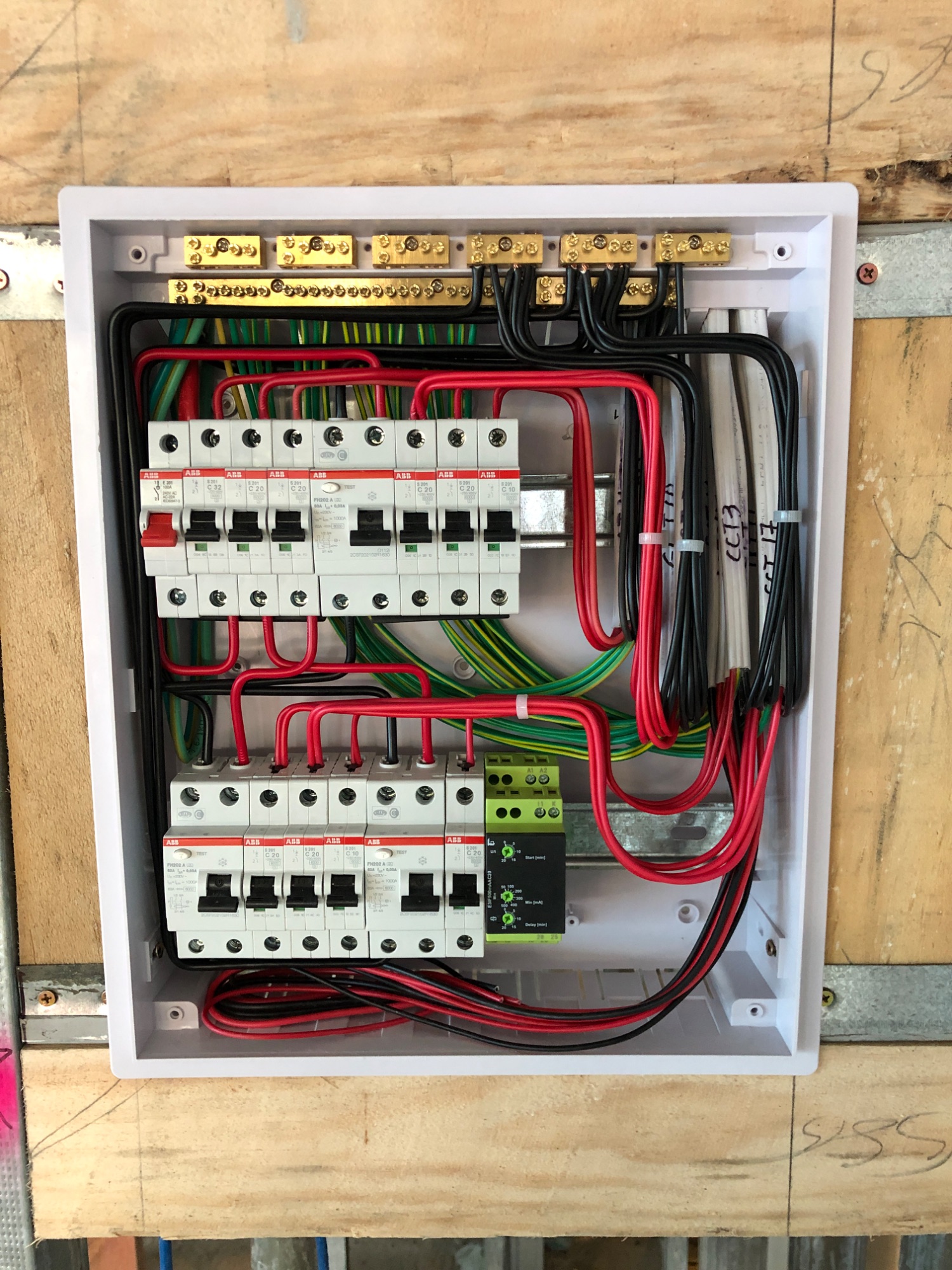
- the switchboard: its condition, the circuit breakers or fuses, the RCDs and the labelling
- each RCD, tested to confirm it turns off
- sockets and switches, for heat marks, damage and loose fittings
- light fittings, including older combination bathroom heat, light and fan units
- wiring that can be seen in the ceiling space and under the floor, where it can be reached safely
- the main earth connection, where it can be seen
- the circuits, tested for insulation resistance, earth continuity and polarity
What a check cannot cover
- Wiring inside walls, ceilings and floors cannot be seen. The report covers what could be seen and reached, and what the tests on each circuit showed.
- Spaces that cannot be reached safely are listed in the report as not checked.
- The report records the installation as it was on the day. A fault that comes and goes is traced under fault finding.
The written report
The report lists what was found, room by room: where each item is, what was seen or measured, and what work it needs. Anything that needs attention straight away is pointed out on the day. Repairs are quoted separately, and you decide which to go ahead with.
People often search for this service as an electrical inspection. It is not the inspection of high-risk electrical work that the Electricity (Safety) Regulations 2010 require, which only a person authorised to inspect that work may carry out.
Nor is the report a certificate. A Certificate of Compliance is issued for prescribed electrical work done on an installation, and an Electrical Safety Certificate after such work is complete.
What happens in an electrical safety check
- Tell us the address, the type of building and what prompted the check, and send a photo of the open switchboard.
- We agree what the check covers and the quote.
- Someone gives us access to every room, the switchboard, the ceiling space and under the floor. Some tests need the power off, circuit by circuit, so the time is agreed with you.
- We go through the building room by room, looking and testing, and note each finding.
- You receive the written report.
- The repairs you choose are quoted, carried out, tested and certified.
Smaller repairs come under maintenance and repairs, and an old board can be replaced as a switchboard upgrade. For a house you are buying, see pre-purchase electrical checks. We check homes and businesses across Auckland, from the North Shore to South Auckland; see our service area. Other work for homes is listed under residential electrical.
FAQ
Do you fix what the check finds?
Yes, if you choose to go ahead. Each repair is quoted separately, and once it is done it is tested and certified.
Is this an electrical warrant of fitness?
No. The Electricity (Safety) Regulations 2010 call it a warrant of electrical fitness, and it applies only to connectable installations in vehicles, relocatable buildings and pleasure vessels.
How often should RCDs be tested?
WorkSafe suggests testing switchboard RCDs every six months, for example when the clocks change for daylight saving. For socket-outlet and portable RCDs, it suggests testing regularly, for example every three months: plug in a small appliance and press "test", and if the appliance turns off, the RCD is working. The homeowner code of practice, NZECP 51, says never to use an RCD whose test button fails to turn it off, and to seek advice from a licensed electrical worker, as it may need replacing.