
 Open Client Check
 Open COC / ESC
Electrical faults we trace
Electrical fault finding starts from what you have noticed:
- a circuit breaker or RCD that trips, straight away or now and then
- sockets, or a whole room, with no power
- lights that flicker or will not turn on
- an appliance that trips the power when it is switched on
- a switch or socket that is warm, buzzing or discoloured
Safety first
- Keep the switchboard covers on, and do not touch anything behind them.
- If a breaker or RCD trips again as soon as it is reset, leave it off.
- Stop using any socket, switch or appliance that is hot, scorched, buzzing or smells of burning.
- If there is smoke or fire, get everyone out and call 111.
Why does the power keep tripping?
WorkSafe describes what an RCD does: it constantly monitors the current flowing along a circuit, and if it senses any loss of current it shuts off immediately. What WorkSafe says about tripping narrows down where to look:
- If an RCD trips when one appliance is switched on, that appliance should be repaired or replaced.
- If it trips only when several appliances are used together, have the RCD checked by a licensed electrician.
- An appliance that repeatedly blows a fuse, trips a circuit breaker or has given a shock should be disconnected at once.
- If a circuit breaker keeps tripping, or a fuse keeps blowing, WorkSafe's advice is to call a licensed electrical worker.
Fuses that blow and circuit breakers that trip for no reason are also on WorkSafe's list of warning signs that the installation in a home is becoming dangerous. When the cause is not one appliance, we find it by testing the circuit.
Sockets or lights with no power
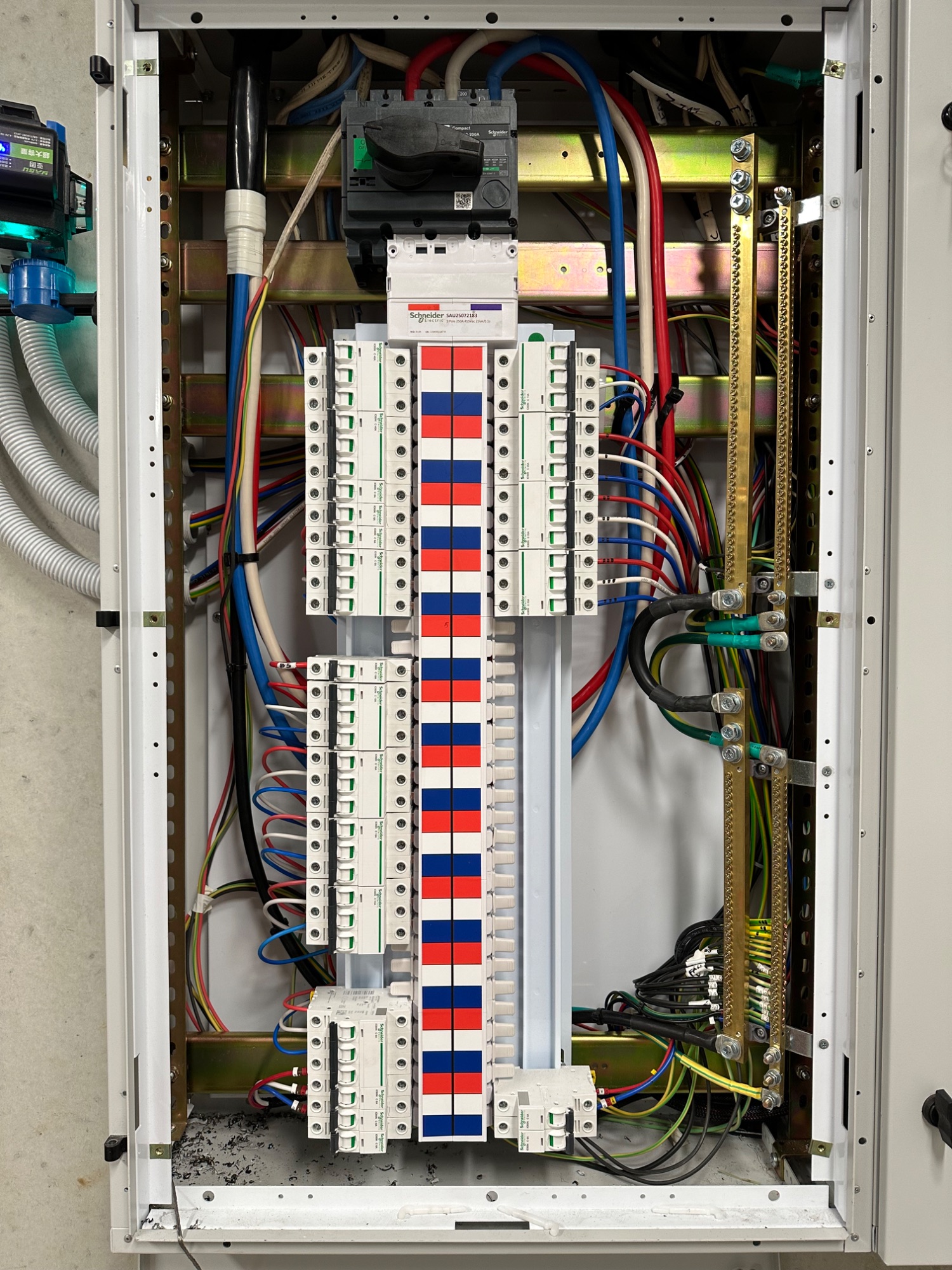
When some sockets or lights have no power, or a whole room, a photo of the switchboard with the door open shows its labels and whether a circuit breaker or RCD has tripped. On an older board with fuses, WorkSafe's advice is never to replace fuse wire with a larger size of fuse wire or another object, as doing so may result in fire. When nothing at the switchboard has tripped, we trace the cause by testing, point by point.
What to tell us
- which breaker or RCD trips, from its label, or a photo of the switchboard with the door open
- when it happens: a time of day, wet weather, or a particular appliance in use
- what changed recently: a new appliance, building work or a new fitting
- what still works, and what does not
The photos that help are listed in before you call an electrician.
What we test
We isolate the circuit and test it. Insulation resistance shows damaged or damp cables, fittings and appliances; earth continuity confirms the earth path; polarity confirms the connections; and the RCD is tested to confirm it trips as it should. Each point and appliance on the circuit is then checked in turn to narrow down the cause.
How a fault-finding job runs
- You tell us what happens and when, and send a photo of the switchboard.
- We visit, isolate the circuit and test it.
- We list what we found, point by point, and what the repair involves.
- You confirm the repair and its quote before we carry it out.
- We repair the fault, re-test the circuit and turn it back on.
- You receive the certificate for the repair work.
When testing shows that a circuit needs new cables, or that the switchboard itself is the cause, rewiring or a switchboard upgrade is listed and quoted separately. Smaller repairs are part of maintenance and repairs. We trace faults in homes and businesses across Auckland, from the North Shore to South Auckland; see our service area. Other work for homes is listed under residential electrical.
FAQ
My RCD keeps tripping. What should I do?
Do not keep resetting it. Note which part of the building lost power, what was switched on at the time and whether it happened in wet weather, then call us with those details.
Are flickering lights a sign of a fault?
WorkSafe lists flickering lights among the warning signs that the installations in a home are becoming dangerous, and advises having a licensed electrician or electrical inspector check the internal wiring when you notice them. We trace the cause by testing the circuit.
How do you trace a fault that comes and goes?
From its pattern. Note the time, the weather and what was running each time it happens; that record narrows down where the testing starts.
Can I look inside the switchboard myself?
No. Leave the covers on. A photo with the door open shows the labels and breakers, which is what we need before the visit.