
 Open Client Check
 Open COC / ESC
What electrical maintenance and repairs include
Electrical repairs and maintenance cover fittings and circuits that have stopped working, worn out or been damaged, in homes and businesses:
- faults such as tripping circuits, points with no power and lights that do not work, traced through fault finding
- cracked, loose or worn switches and sockets
- light fittings, extractor fans and appliance connections
- older combination bathroom heat, light and fan units: WorkSafe has noted fires involving units made before 2008
- the elements, thermostats and wiring of electric hot water cylinders
- RCDs that fail their test
- failed lights in shops, offices and warehouses
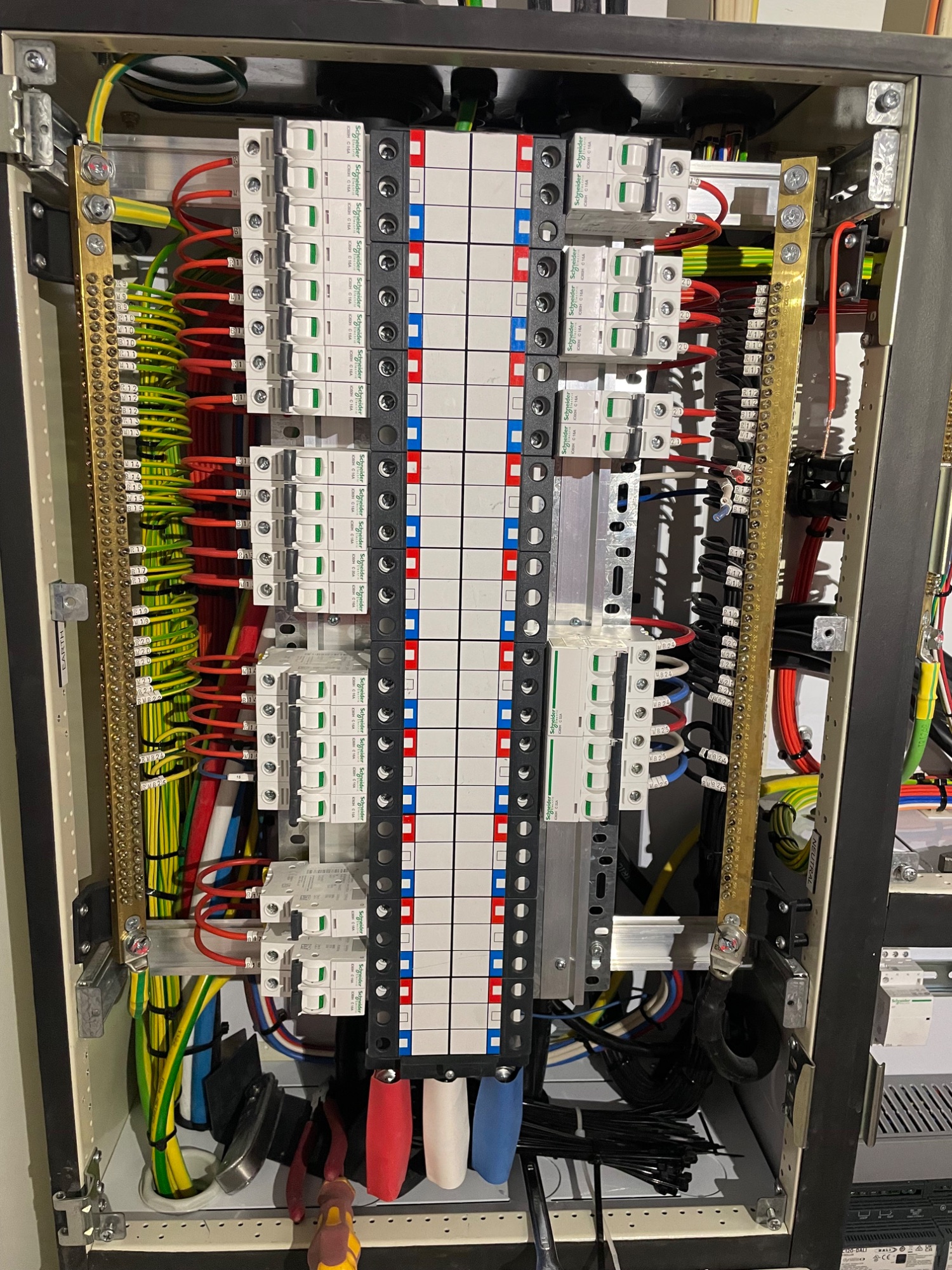
- switchboard repairs, and old or full switchboards replaced, under switchboard upgrades and repairs
Signs of an electrical problem
WorkSafe names these warning signs that the electrical installation in a home is becoming dangerous:
- plugs and sockets that are hot to the touch or have brown scorch marks
- fuses that blow and circuit breakers that trip for no reason
- flickering lights
When you notice them, WorkSafe advises having a licensed electrician or electrical inspector check the internal wiring. Our electrical safety check is a check of an existing installation, with a written report.
WorkSafe's checklist for appliances adds fumes, smoke or a burning smell, which mean overloading or overheating and a fire risk; a shock of any strength, which can come from the plumbing or a sink as well as an appliance; and hot spots on appliances, wall sockets or flexes.
While you wait for the repair
What to do
- Stop using an appliance with any of these problems and have it repaired. Disconnect at once an appliance that keeps blowing a fuse, keeps tripping a circuit breaker or has given a shock.
- If an RCD trips when one appliance is switched on, that appliance should be repaired or replaced. If it trips only when several appliances are used together, have the RCD checked by a licensed electrician.
- If a switchboard shows scorching or burn marks, or you hear arcing or crackling, turn the main switch off straight away and contact a registered electrical worker.
What not to do
- Never replace fuse wire with a larger size of fuse wire or another object: it may cause a fire.
- Do not disturb anything that may contain asbestos: older switchboards may contain it as an insulating material.
- Never throw water on an electrical fire.
RCDs, and how to test them at home
An RCD constantly monitors the current flowing along a circuit and shuts off immediately if it senses a loss of current. WorkSafe says it prevents a shock from being fatal by shutting the system down instantly. NZECP 51, the homeowner code of practice, points out that an RCD will not protect someone who touches the active and neutral wires at the same time.
RCDs can be fitted in a socket-outlet, wired into the switchboard, or portable. NZECP 51 notes that from 1 January 2003 the regulations required new homes to have RCDs on the main switchboard; before then, a home may have had an RCD in the bathroom or laundry, usually built into a socket-outlet.
- To test a socket-outlet or portable RCD, plug in a small appliance and press "test". If the appliance turns off, the RCD is working. WorkSafe suggests testing these regularly, for example every three months.
- WorkSafe suggests testing switchboard RCDs every six months, for example when daylight saving starts and ends.
- Never use an RCD that does not turn off when its test button is pressed. It may need replacing, and connecting an RCD to the main switchboard is work for a licensed electrical worker.
How a repair job runs
- You send a list of what needs repair, room by room, with a photo of each item and of the switchboard.
- Where the cause is clear, we quote from the list; where it is not, we visit and test first.
- You confirm which items are repaired, and the quote, before the visit is booked.
- We repair or replace each item on the list.
- Every item is tested once it is repaired, before the power is restored.
- The certificate for the listed repairs is given to you.
How a repair is quoted
Each item is priced on its own line, so you choose which repairs go ahead. A fault whose cause does not show in a photo is traced by testing first, and its repair is quoted once the cause is known.
Small repairs are quicker to quote and book together. Before you call, go through the building and note each item: the room, the fitting and what it does wrong, for example "kitchen, double socket by the fridge, cracked cover". With that list and a photo of each item, the right parts can come on the first visit.
When a repair becomes an upgrade
Some repairs point to a larger job. If the same circuit keeps failing, the fix may be rewiring that circuit; if the switchboard has no room left, the fix may be an upgrade. The larger job is listed and quoted on its own, and nothing beyond the confirmed repairs is done without your agreement.
WorkSafe's note on the November 2025 changes to the regulations states that existing installations may continue to exist and be repaired so long as they are not unsafe; only the parts that are changed need to meet the new standards. WorkSafe adds that the old version of the standard can still be used for repair work, and that where a repair moves into alterations or additions, that work must comply with the newly cited standard.
Maintenance for homes is part of our residential electrical work. We carry out repairs for homes and businesses across Auckland, from the North Shore to South Auckland; see our service area.
FAQ
A socket is cracked. Can I keep using it?
No. Stop using it until it is replaced, and send us a photo so we know which fitting it is.
Do you do electrical maintenance for businesses?
Yes. Faults, repairs, replacements and switchboard upgrades for shops, offices and warehouses, as well as homes.
Can several small repairs be done in one visit?
Yes, when they are on one list. Listing each item room by room lets us quote them together and bring the parts for all of them.
Can you replace a light fitting with one I have chosen?
Yes. Tell us where it goes and send its instructions. If the new fitting is heavier than the one it replaces, the ceiling fixing is checked before it goes up.
Is a Certificate of Compliance issued for a repair?
Replacing a fitting in an existing installation, such as a switch, socket or light fitting, is low-risk prescribed electrical work, and the regulations make a Certificate of Compliance for it optional. New fixed wiring, such as an added power point or a new circuit, needs one.