
 Open Client Check
 Open COC / ESC
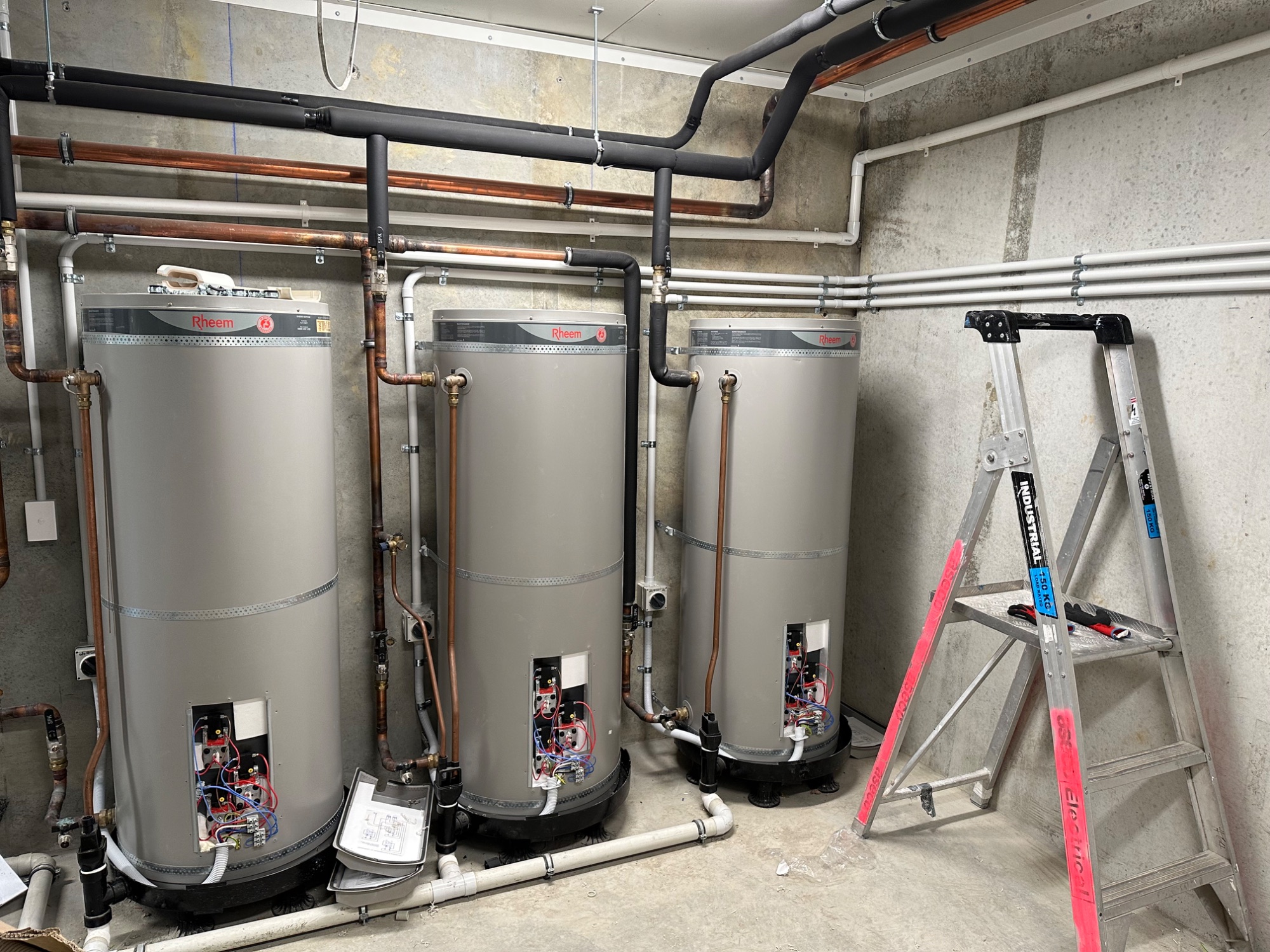
What we do on a hot water cylinder
As a hot water cylinder electrician, we work on the electrical parts of an electric cylinder:
- elements: testing, and replacing one that has failed
- thermostats: testing, and replacing one that no longer switches the element on and off
- the wiring, and the isolating switch at the cylinder
- timers that switch the element on at set times
- the cylinder's circuit, back to the switchboard
- disconnecting the old cylinder and connecting the new one when a plumber replaces it
The cylinder itself, its valves and its pipework are a plumber's work, and we do not replace cylinders. A leak from the cylinder, a valve or a pipe is a job for a plumber.
No hot water: is the fault electrical?
On an electric cylinder that is not leaking, these are signs of an electrical fault:
- no hot water, or water that is only warm
- the cylinder's circuit breaker or RCD tripping
- a burning smell near the cylinder or its switch
A repair starts with testing, which shows whether the cause is the element, the thermostat, the wiring or the switching.
Safety before the visit
- Keep the covers over the element and thermostat in place. WorkSafe's advice is to always make sure they are in place, to prevent electric shock.
- If the cylinder's circuit breaker continues to trip, call a licensed electrician, as WorkSafe advises.
- WorkSafe says a burning smell means overloading or overheating and a fire risk, and lists an electric shock of any strength, including one from the plumbing or a sink, as a hazard. Its advice for either is to stop using the appliance and have it repaired by an electrician.
- After any electric shock, WorkSafe's advice is to seek medical treatment and advice immediately, even if the person feels fine.
How a hot water cylinder repair runs
- You tell us what is happening and since when, and send a photo of the cylinder's label and of the switchboard with the door open.
- We visit, isolate the cylinder's circuit and test the element, the thermostat, the wiring and the switching.
- We tell you what has failed and what the repair involves, and you confirm the quote before we carry it out.
- We repair or replace the faulty part with one that matches the cylinder.
- We test again before the supply is turned back on.
- You receive the certificates the work needs.
Water temperature and scalding
The thermostat sets the temperature the element heats the water to. Under section 17 of the Building Act 2004, all building work must comply with the Building Code to the extent the Act requires, whether or not it needs a building consent. Clause G12 of the Building Code requires a hot water system to be "capable of being controlled to prevent the growth of legionella bacteria", and hot water for personal hygiene to be delivered "at a temperature that avoids the likelihood of scalding". WorkSafe recommends fitting a tempering valve to the hot water cylinder if there are young children in the home. A tempering valve is part of the plumbing, outside our work.
Timers and the switchboard
Some cylinders are switched by a timer, so the element heats only at set times. We fit, replace and rewire timers, and trace faults on the cylinder's circuit back to the switchboard. If the switchboard itself needs work, it is quoted separately: see switchboard upgrades.
Other faults around the house are covered under fault finding and maintenance and repairs, and the rest of the electrical work in a home under residential electrical. The photos that help before a visit are listed in what to send an electrician for a quote. We work on hot water cylinders across Auckland, from the North Shore to South Auckland: see the areas we cover.
FAQ
Electrician or plumber: who do I call when there is no hot water?
For an electric cylinder that is not leaking, an electrician: we test the element, the thermostat, the wiring and the switching. A leak from the cylinder, a valve or a pipe is for a plumber.
My hot water cylinder keeps tripping. Can you find the fault?
Yes. With the cylinder's circuit isolated, we test the element, the thermostat, the wiring and the switching to find what is tripping it, then quote the repair for you to confirm.
Do you replace hot water cylinders?
No. Replacing the cylinder, its valves and its pipework is a plumber's work. When a plumber replaces a cylinder, we disconnect the old one and connect the new one to its supply.
Will I get a certificate for a new element or thermostat?
In the Electricity (Safety) Regulations 2010, elements and thermostats are fittings, and replacing a fitting in an existing installation is low-risk prescribed electrical work. For low-risk work, the regulations say a Certificate of Compliance may be issued but is not required. New wiring, such as a new circuit for a cylinder, is fixed wiring work, and WorkSafe and EWRB both say a Certificate of Compliance must be issued for any fixed wiring work.