
 Open Client Check
 Open COC / ESC
What an electrical renovation covers
A renovation changes wiring that is already in place, so as a home renovation electrician we start by recording what stays, what moves and what is new. Renovations are part of our residential electrical work, and they cover:
- rewiring part or all of the house
- new circuits for extensions, new rooms and appliances
- switches, sockets and light points moved or added
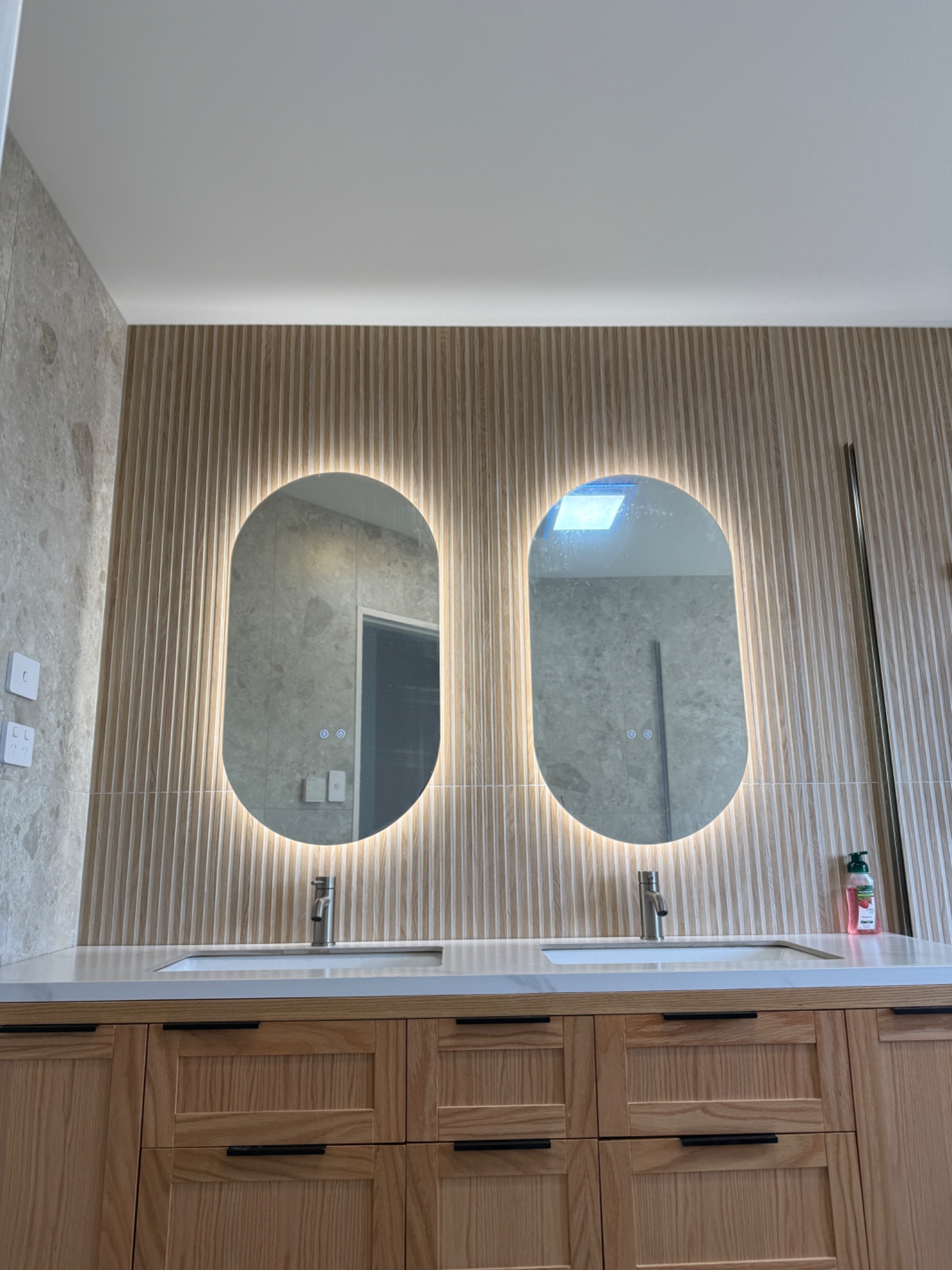
- kitchen and bathroom upgrades
- lighting changes, including LED strip
- switchboard changes when the new circuits need room
How a renovation job runs
- Send the renovation plans or photos of each room, or we visit the house.
- We list each room: points that stay, points that move, new points and new circuits.
- You confirm the room lists and the quote; nothing on site changes before that.
- The work is staged with your builder: cables while walls and ceilings are open, then switches, sockets and lights after the linings.
- Every new or changed circuit is tested.
- When the electrical work is finished, you receive its certificate.
The walkthrough
On a renovation, the walkthrough is where the quote and the job are matched. We go through the house with you room by room and record:
- existing points that stay as they are
- points that move, and where they move to
- new points, and the circuits they need
- anything found that needs repair, listed as its own item
The confirmed list is what the work follows. A change after that is recorded against it as a variation and priced before it is done. How we work sets out the list and how changes are handled.
Does old wiring have to be replaced when you renovate?
WorkSafe says the November 2025 changes to the regulations do not mean everyone needs to upgrade old electrical installations: existing installations may continue to exist and be repaired so long as they are not unsafe, and only the parts that are changed need to meet the new standards. WorkSafe adds that the old version of the standard can still be used for repair work, and that where repair work moves into alterations or additions, that work must comply with the newly cited standard.
WorkSafe's warning signs that an installation is becoming dangerous are plugs and sockets that are hot to the touch or have brown scorch marks, fuses that blow and circuit-breakers that trip for no reason, and flickering lights; it says these signs may mean the wiring needs upgrading. A rewire is simplest during a renovation, while the walls and ceilings are open.
When a renovation needs new circuits or a switchboard upgrade
New circuits are listed for extensions, new rooms and appliances that need their own, with each appliance's circuit planned from its installation instructions. WorkSafe states that new circuits from the switchboard that supply lighting or socket-outlets in a home must have RCD protection. Every new circuit also needs room on the switchboard; if the board has none, a switchboard upgrade is listed and quoted with the rest of the work.
Kitchen renovations, bathrooms and extensions
In a kitchen or bathroom renovation, the cables go in before the linings and cabinets, and the appliances, lights and fittings are connected once the cabinets, benchtop and tiles are in. The circuits, points and lighting for each room are planned as part of our kitchen and bathroom electrical work. For an extension, the new circuits are taken from its plans and go on the same list as the rest of the renovation.
What to prepare
- the renovation plans or the builder's drawings
- the appliances you have chosen, so their circuits can be planned
- photos of each room and of the switchboard
- the builder's programme, showing when walls and ceilings will be open
- any asbestos test result: WorkSafe says a home built before 1 January 2000 may contain some asbestos materials
Renovations anywhere in our service area, from the North Shore to South Auckland, are quoted from the plans or photos, or after a visit to the house.
FAQ
Can we stay in the house during the work?
It depends on the renovation. The work is planned room by room, and the power is off only while circuits are connected or changed. Those times are agreed with you in advance.
Do you work with our builder?
Yes. The electrical stages follow the builder's programme, so cables go in while walls are open and fittings go on after the linings.
What happens if you find a problem in the existing wiring?
It is recorded with what it needs and priced. You decide before anything beyond the confirmed list is done.
When should I involve an electrician in a renovation?
At the start, before anything on site changes. The walkthrough and the room lists come first, so the cables can go in while the walls and ceilings are open and the fittings after the linings.