
 Open Client Check
 Open COC / ESC
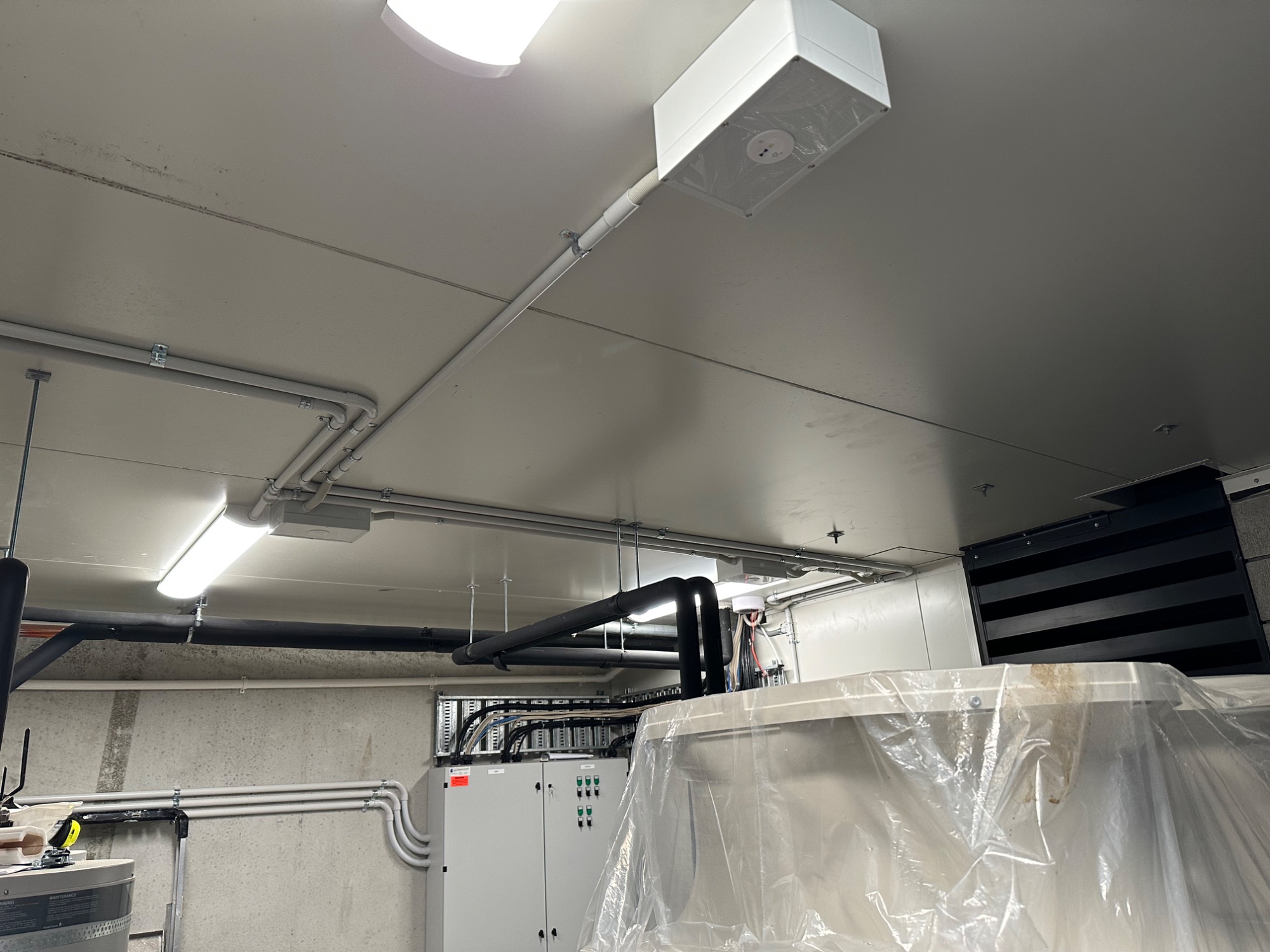
The electrical side of a heat pump
A heat pump job has two parts. The heat pump installer fits the indoor and outdoor units and the pipework between them. As the heat pump electrician, we do the electrical side:
- a check that the switchboard has room for the new circuit
- a dedicated circuit from the switchboard to the outdoor unit
- an isolating switch beside the outdoor unit, so the supply can be turned off there
- the connection of the heat pump to the new circuit
- testing, and the certificates for the electrical work
Fitting the heat pump itself, and all work on the refrigerant pipework, stay with the installer.
How a heat pump wiring job runs
- You send the heat pump model, its installation instructions, where the indoor and outdoor units will go and a photo of the switchboard with the door open. If that is not enough to quote from, we come and look.
- We list the job: the circuit and its route, the position of the isolating switch and any work the switchboard needs.
- You confirm the list and the quote, and we agree the dates with you and the heat pump installer.
- We run the circuit and fit the isolating switch at the stage agreed with the installer.
- Once the units are in place, we connect the heat pump, test the circuit and turn the supply on.
- You receive the certificates for the electrical work.
A dedicated circuit for each heat pump
Each heat pump is wired from its installation instructions, which state the supply it needs. Its circuit is sized from them, so send them before the quote. The Electricity (Safety) Regulations 2010 also require a copy of any manufacturer's instructions used in the work to be attached to the Certificate of Compliance.
The new circuit needs a free space on the switchboard. If the board has no room, that work is listed and quoted separately as a switchboard upgrade.
The cable runs from the switchboard to the outdoor unit through the ceiling space, under the floor or along an outside wall. We agree the route with you before quoting, including any part that will be seen on the outside of the house.
Planning with the heat pump installer
- Fix the outdoor unit's position first: the circuit ends there, and the isolating switch goes beside it.
- Send us the installer's dates, so the circuit is in before the units are connected.
- With more than one heat pump, each outdoor unit is listed with its own circuit and isolating switch.
- When an old heat pump is replaced, the existing circuit is checked against the new model's installation instructions before it is reused.
We wire heat pumps across Auckland, from the North Shore to South Auckland, working with the installer you choose; see our service area. Heat pump wiring is part of our residential electrical work. For heating under a tiled floor, see electric underfloor heating, and for a car charger on the same switchboard, EV charger installation.
FAQ
Do you install heat pumps?
No. We do the electrical side: the dedicated circuit, the isolating switch, the connection, testing and the certificates. The heat pump installer fits the indoor and outdoor units and the pipework.
Can you work with the installer I have chosen?
Yes. Send us the installer's dates and the position of the outdoor unit, and the circuit is planned around them.
Will my switchboard need an upgrade?
Not always. If the board has room for the new circuit, the circuit goes on the existing board. If it has no room, the switchboard work is listed and quoted separately before you confirm.
Will I get a certificate?
Yes. A new circuit is fixed wiring work, and WorkSafe and EWRB both say a Certificate of Compliance must be issued for any fixed wiring work. The certificate describes the electrical work we did; the units and pipework are the installer's work.
The heat pump keeps tripping its circuit breaker. Can you help?
Yes, on the electrical side. WorkSafe's advice is to call a licensed electrician if a circuit breaker continues to trip. We test the circuit, the isolating switch and the connection, as described under fault finding; a fault inside the heat pump goes back to the installer.