
 Open Client Check
 Open COC / ESC
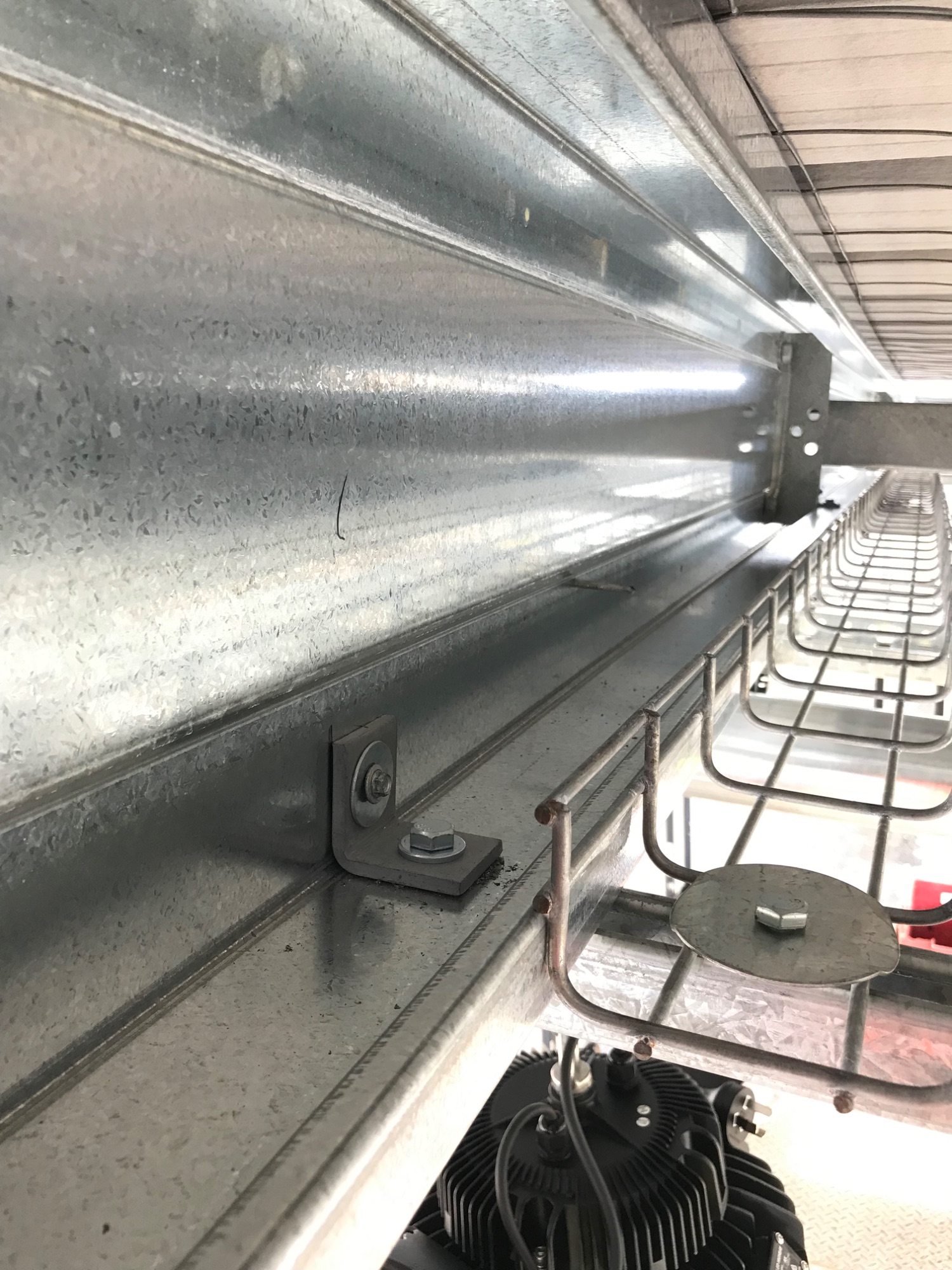
Warehouse lighting is planned together with the cabling that feeds it: where each high-bay light hangs, which switch controls it, the route of the cable tray under the roof, and the circuits the lights need at the switchboard. These are settled before the quote, because they decide the circuits and the order of the work, so the job can be staged around a warehouse that stays open. In Auckland, this is part of our commercial and warehouse lighting and commercial electrical work.
What to decide before the quote
The quote is a count of what the plans show: each light, switch, socket, data point and equipment connection becomes a line on the list for its area.
| What to decide | Why it matters | What to send |
|---|---|---|
| Where each light goes, area by area | Each light point is a line on the list, with its fitting and the switch that controls it | A floor plan with the racking, benches and machines marked |
| Which lights switch together | Where the plans leave it open, it is settled with you before the quote | The switch positions marked on the plan |
| The fittings | Each fitting is on the list you confirm with the quote | The model or specification sheet of each fitting |
| The route of the cable tray | The tray carries the long cable runs to each area | The building drawings, or photos of each area |
| Machines and equipment | The rating label or installation instructions state the supply each one needs, single or three phase | The equipment list, with each item's rating |
| Data points | They are planned with the power points, from the same drawings | The data points and the network cabinet marked on the plan |
| Shutdowns | The power is off only at times agreed before the work is booked | Your working hours |
| Access | The work needs access to the main switchboard and any locked areas | Who lets us in, and the building's rules for contractors |
High-bay lights
Our cable tray installation project, in a commercial building with a high steel roof, shows high-bay LED lights hung below the roof steel, with wire basket tray along the steel above them. Where old lights are replaced, the existing circuits are checked before new fittings are chosen.
- Fittings you supply: send the model or its specifications, and have the fittings on site, marked by area, before they are installed.
- Dimming: an LED fitting dims properly only with a dimmer that suits it, so the two are chosen together, before anything is bought.
- Replacing old fittings: the replacement can cover only the areas that need it. WorkSafe's note on the November 2025 regulation changes says only the parts that are changed need to meet the new standards.
Cable tray under the roof
Cable tray carries long cable runs through ceilings and warehouses. The photos of the same project show galvanised tray and wire basket tray fixed along the roof steel, and the work at roof height done from a scissor lift. We install the tray, the cabling, the switchboard work and the points in the order the building allows, and every circuit is tested before it is put into service.
Data runs are planned at the same time, each numbered at both ends and tested, as in our data cabling work.
Circuits and the switchboard
New lighting circuits start at the switchboard, and the circuits the job adds are checked against the room left in it. Before anything at an existing board is changed, every circuit and what it supplies is listed, so you know which machines and equipment lose power while the board is worked on. New circuits are added with their protection, and the board is labelled circuit by circuit. A board with no room left for the new circuits is one of the reasons for a switchboard upgrade.
While the warehouse stays open
When the warehouse stays open during the work:
- the power is off only for the parts of the job that need it, such as connecting new circuits at the switchboard, at times agreed before the work is booked and set around your working hours
- the circuit list shows which equipment each shutdown affects, so machines, fridges, freezers and the network can be planned around it
- the work can be staged area by area, so the rest of the premises keeps running
The Electricity (Safety) Regulations 2010 require anyone who works on part of an installation to make sure the work has not adversely affected the electrical safety of the rest of it.
Who may do electrical work in a warehouse
WorkSafe states that employers, employees, landlords and tenants cannot carry out electrical work in their workplace or any rented property unless they are registered electrical workers with current practising licences. EWRB, the Electrical Workers Registration Board, suggests checking that the licence has not expired, and searching the public register to confirm it has not been suspended. Adam Xu, Registered Electrician, runs the business, and the work on every job is led by a Registered Electrician.
How we work, and what to send
For a warehouse in Auckland, send the drawings, the equipment list and the models of the fittings you have chosen, with photos of each area and of the switchboard with its door open. Say if the work has to be done outside working hours, and send the landlord's or building manager's rules for contractors. The general list is in what to send an electrician for a quote.
- We quote from the drawings, or visit first when they do not show enough, such as the condition of the existing switchboard.
- We list every light, switch, socket, data point and equipment connection, area by area; you confirm the list and the quote before the work is booked.
- Every circuit is tested before it is put into service, and you receive the certificate when the job is finished.
FAQ
Do the old lights have to be replaced?
Not because of the November 2025 regulation changes: WorkSafe says existing installations may continue to exist and be repaired so long as they are not unsafe. The regulations do say that an owner or operator must not use an installation, or let anyone else use it, if it is electrically unsafe. If you are unsure about the existing lights or cabling, an electrical safety check ends with a written report of what was found.
Will we get a certificate?
For new light points and new circuits, yes: they are fixed wiring work, and you receive the Certificate of Compliance, with an Electrical Safety Certificate once the work is connected. Replacing a light fitting in an existing installation is low-risk work, for which the regulations make a Certificate of Compliance optional.
Who receives the certificates?
The regulations say a copy of the Certificate of Compliance goes to the person who contracted for the work within 20 days after the work is completed, or, if that person is not readily available, to the occupier or owner. A copy of the Electrical Safety Certificate goes to the same person within 20 working days after it is issued. We keep copies of both for at least seven years.