
 Open Client Check
 Open COC / ESC
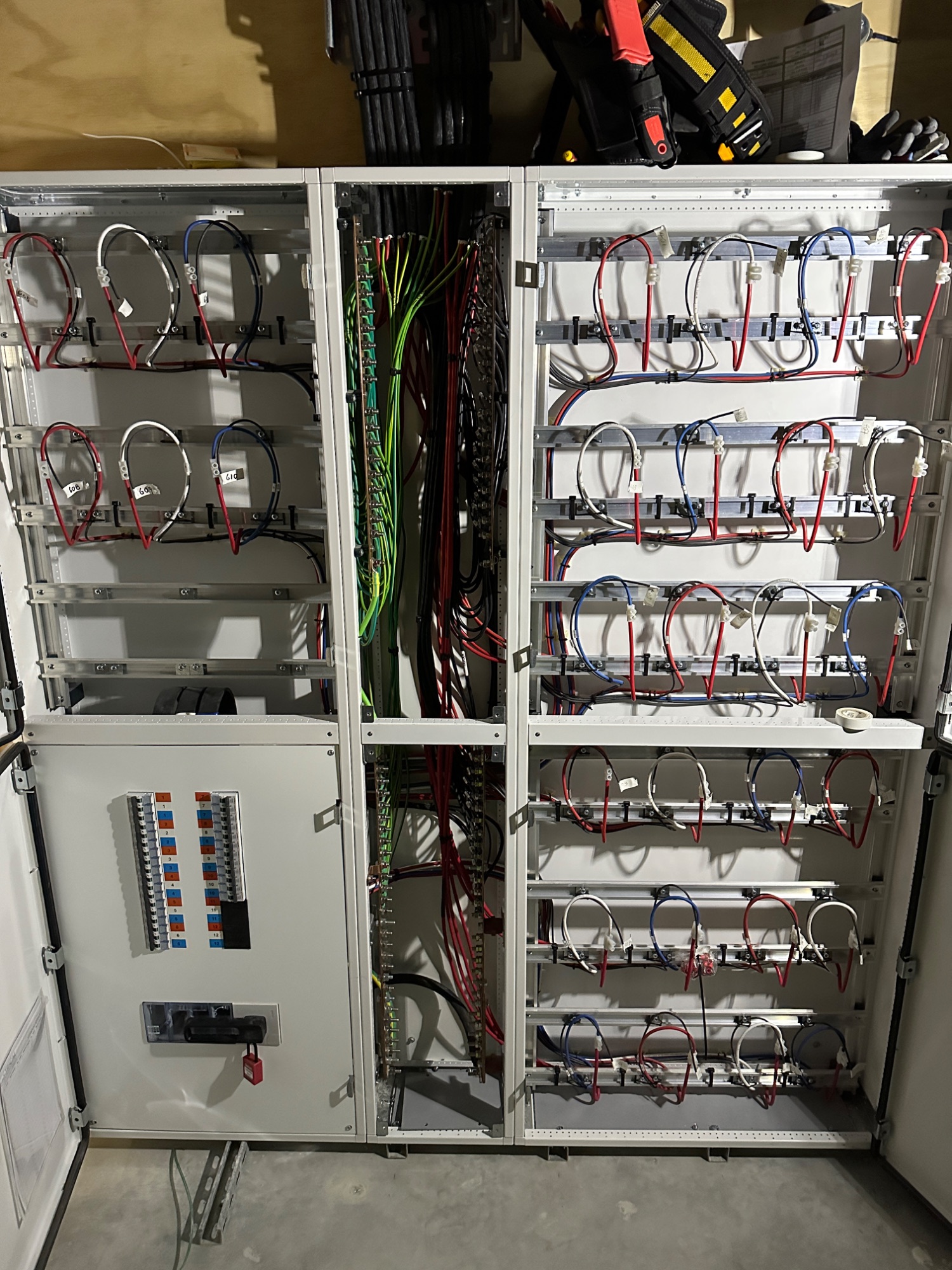
When a switchboard needs an upgrade
A switchboard is also called an electrical panel or a fuse box. An upgrade or a replacement usually starts because something else is changing:
- new circuits for a renovation, a kitchen or a bathroom
- a dedicated circuit for an EV charger or a heat pump
- extra equipment in a shop or office fit-out
- a board with no room left for the circuits the building now needs
- an old fuse board, or a board without RCDs, when new circuits are added
- faults traced back to the board during fault finding
In homes, switchboard upgrades and repairs are part of our residential electrical work.
What an upgrade covers
- a list of every existing circuit and what it supplies, made before anything is changed
- the new circuits the job adds, with their protection
- replacing or re-arranging the board, labelled circuit by circuit
- testing every circuit before the power goes back on
- the certificate for the work
Switchboard repairs
A switchboard repair is also a job of its own, without replacing the board: a circuit-breaker or an RCD replaced, or a burnt connection repaired. NZECP 51, the homeowner wiring code, says never to use an RCD if its test button fails to turn it off, and to seek advice from a licensed electrical worker, as the RCD may need replacing. The repaired circuits are tested before the power goes back on.
RCDs and circuit-breakers
An RCD, or residual current device, constantly monitors the current flowing along a circuit and shuts off immediately if it senses a loss of current. NZECP 51 also points out that circuit-breakers will not protect a person from an electric shock.
WorkSafe states that it is a legal requirement for all new circuits that start at the switchboard and supply lighting or socket-outlets in a home to have RCD protection. NZECP 51 records that from 1 January 2003 the Electricity Regulations required all new domestic installations to have RCDs mounted on the main switchboard, and that homes wired before then may have had an RCD in the bathroom or laundry, usually as a socket-outlet type.
Old fuse boxes
For an old fuse box, WorkSafe's advice is never to replace a fuse wire with a larger size of fuse wire or another object, because doing so may result in fire, and to call a licensed electrician if a fuse keeps blowing or a circuit-breaker keeps tripping. It also tells homeowners to look out for heat discolouration on the switchboard, such as scorching or burn marks; if you find it, turn the main switch off and contact a registered electrical worker. If you are unsure about an old board, an electrical safety check ends with a written report of what was found.
Asbestos in old switchboards and fuse boxes
WorkSafe says older switchboards may contain asbestos as an insulating material, and that a home built before 1 January 2000 may contain some asbestos materials. Only a sample test confirms it; until then, do not disturb it, and treat anything you are not sure about as asbestos.
Many older style fuse boxes had asbestos-containing backing boards of Bakelite, which WorkSafe describes as non-friable. Its guidance on removing one says an electrician should first isolate and lock off the supply and test that the system is not live, and that if any friable parts are still present, the fuse box must be removed by a Class A asbestos removalist. Where a removalist is needed, that is settled before the work is booked.
How the job runs
- You send photos of the board and tell us what is changing or what is wrong, or we come and look.
- We list each circuit and what it supplies, and the circuits the job adds or the repair it needs.
- You confirm the list and the quote before we book the work.
- We isolate the supply, do the work and test every circuit.
- The power goes back on and the board is labelled; for an upgrade, you receive the certificate.
Work that has to be inspected
EWRB's guidance for consumers says the law requires some electrical work to be inspected, particularly work on the main switchboard, the main cable and the main earth, and that the electrical worker arranges a licensed electrical inspector. Under the regulations, mains work, which includes work on the mains and the main earthing system, is high-risk work: the inspector cannot be the person who did it, and it is not complete until the record of inspection is issued with the Certificate of Compliance. When a job includes this work, we arrange the inspection with an Electrical Inspector before the power goes back on.
Photos that help with a quote
A clear photo of the open switchboard door, a photo of the meter and a short note of what you are adding or what is wrong usually let us quote without a first visit, anywhere in our service area from the North Shore to South Auckland. For an old board, add a photo of the whole board and its surroundings, and the year the house was built, if known. Do not remove covers or touch anything inside the board, and do not drill, scrape or clean a backing board that may contain asbestos.
Will the power be off during the upgrade?
Replacing or re-arranging a board means isolating its supply, so everything the board feeds is off while we work. Someone needs to give us access, and we agree the time with you when the job is booked. At home, plan for the fridge, freezer and alarm, and tell us if anyone relies on equipment that needs power. For a business, the off time is set around trading or working hours.
Commercial switchboards
Main and sub switchboards for shops, offices and warehouses are planned with the fit-out drawings, so the board has the circuits the equipment needs. See the main sub switchboard project and our commercial electrical work.
FAQ
Do I need to upgrade my switchboard?
Usually when the board has no room for the circuits you are adding; not because of its age alone. A fault traced back to the board may need only a repair, without replacing the board. WorkSafe says the November 2025 changes to the regulations do not mean everyone needs to upgrade old electrical installations: current installations may continue to exist and be repaired so long as they are not unsafe. WorkSafe also states that new lighting and socket-outlet circuits in a home need RCD protection, so the quote shows whether the old board can take them.
How often should the RCDs in my switchboard be tested?
WorkSafe suggests testing switchboard RCDs every six months, for example when the clocks change to and from daylight saving.
Will I get a certificate?
For an upgrade, yes, and for inspected work a copy of the record of inspection as well. Under the regulations, maintaining or replacing a fitting in an existing installation is low-risk work, and a Certificate of Compliance for it is optional.