
 Open Client Check
 Open COC / ESC
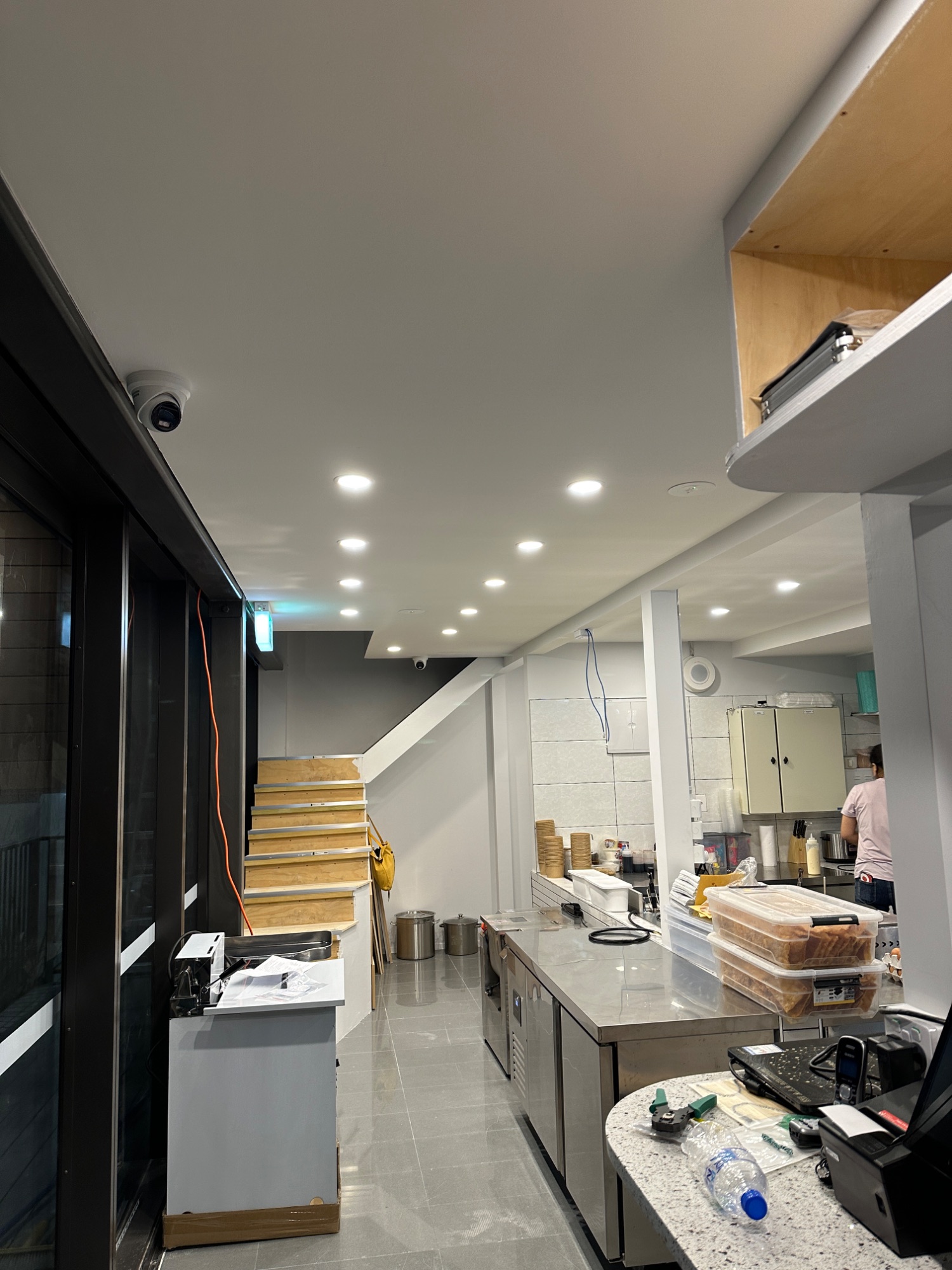
Lighting installation starts with a plan: where each light goes, what fitting it takes and which switch or dimmer controls it. In new builds, renovations, LED upgrades and shop or office fit-outs, every light point goes on the room-by-room list you confirm before the work starts. We install lighting for homes and businesses across Auckland, from the North Shore to South Auckland.
What the work covers
- downlights in new ceilings, and LED fittings in place of old downlights
- pendants over islands, dining tables and stairs
- wall lights, ceiling lights and bathroom lighting
- extra lights in finished rooms, on an existing circuit or a new one
- a switch for every light, including switching from two places on stairs and in long hallways
- dimmers matched to the fittings they control
- new lighting circuits from the switchboard, and changes to existing circuits
Strip lighting is covered under LED strip lighting, and lights for gardens, decks and paths under outdoor and garden lighting.
How a lighting job runs
- Send the plans or a lighting layout, or photos of each room, or we visit.
- We list every light point room by room: the fitting, the switch that controls it and any dimmer.
- You confirm the list, the fittings and the quote before work starts.
- In a new build or renovation, cables go in while the ceilings are open and fittings go up after painting; in a finished room, the new fittings replace the old ones.
- Every light is tested, and each dimmer is checked from low to full brightness.
- New wiring is certified, and you receive the certificate.
Planning points
- Positions: set from the furniture and kitchen plans: over the bench, the island, the dining table and the stairs.
- Switching: which lights switch together, which switch sits beside each door, and which lights switch from two places.
- Dimming: an LED fitting dims properly only with a dimmer that suits it, so the two are chosen together, before anything is bought.
- The ceiling space: joists, ducts and pipes decide where a downlight can go, so positions are checked in the ceiling space or on site at rough-in.
- New circuits: a new lighting circuit starts at the switchboard. WorkSafe states that it is a legal requirement for all new circuits from the switchboard supplying lighting or socket-outlets in domestic buildings to have RCD protection.
LED downlights and replacing old fittings
Changing old downlights to LED usually keeps the existing light points and switches. Where a new fitting needs a different hole size, the opening is cut or covered to suit, and an old dimmer is replaced if it does not suit the new fittings.
Older circuits are checked before new fittings are chosen. The homeowner code of practice, NZECP 51, says to get a licensed electrical worker's guidance before adding lights to a lighting circuit wired in 2-wire cable, and WorkSafe advises consulting one before fitting a light with an earth terminal where the house wiring has no earth. WorkSafe also lists flickering lights among the warning signs that a home's installation is becoming dangerous, and advises having the wiring checked by a licensed electrician or electrical inspector when they appear. Lights that flicker or will not turn on are traced through fault finding.
What to send for a quote
- plans or a sketch of each room, with the light positions marked
- the fittings you have chosen, or the kind of light you want in each room
- photos of the existing lights and switches, and of the switchboard with its door open
- the age of the house, and whether the ceilings have a textured finish
WorkSafe says a home built before 1 January 2000 may contain some asbestos, lists textured ceilings among the places where electricians commonly come across it, and advises not disturbing anything you suspect is asbestos; the only way to confirm it is to test a sample. New downlights mean cutting the ceiling, so mention a textured ceiling when you ask for a quote.
Shops, cafes and offices
Lighting for shops, offices and warehouses, including high-bay lights, is covered under commercial lighting, as part of our commercial electrical work. In a shop, cafe or office fit-out, it is planned from the fit-out drawings with the rest of the electrical work, and timed around the opening date.
FAQ
Can you install light fittings I have bought?
Yes. Send the model or its specifications, and have the fittings on site, marked by room, before they are installed. Dimmable fittings are matched to their dimmers before the list is confirmed.
Will my existing dimmer work with new LED fittings?
Only if it suits them. An LED fitting dims properly only with a dimmer that suits it, so the existing dimmer is checked against the new fittings before they are bought, and replaced if it does not suit them.
Will I get a certificate?
For new light points and new circuits, yes: they are fixed wiring work, and you receive the Certificate of Compliance. Replacing a fitting in an existing installation is low-risk work, for which the regulations make a Certificate of Compliance optional.
Can I change a light fitting myself?
In a home you own and live in, within limits. The homeowner exemption lets an owner-occupier replace light fittings without payment, following the homeowner code of practice, NZECP 51, provided the work does not involve the switchboard. It does not cover rental properties. WorkSafe does not recommend doing your own electrical work unless you have the necessary skills and knowledge, and warns that the colour coding of a home's fixed wiring and of a light fitting's wiring may not match.